
If there’s one group of Facebook users that’s genuinely excited about the introduction of Facebook hashtags, it’s probably brands. Hashtags will make it easier for customers and fans to talk about and interact with their favorite companies, and they’ll streamline discovery for the companies and products they love – now if they want to see who else is talking about Doritos, typing #Doritos will reveal a bunch of Facebook conversations, while typing it into the original search bar on Facebook wouldn’t yield nearly as thorough results.
Hashtags are a discovery tool, and if there’s one thing businesses want, it’s to be discovered by more potential clients. That’s why appearing in searches is so vital for companies, and why search engine optimization, or SEO, is such a booming business.
Eric Covino, an SEO expert and founder of SEO optimization company Creative Signals, thinks Facebook hashtags have the ability to play a big role in business marketing. “When we think of ‘SEO’ we start with user experience and relevancy. So what these Facebook hashtags will do for businesses is allow them to engage customers and potential customers with relevant conversation as opposed to just throwing Facebook ads at them,” he explains. If Covino’s thinking is correct, it might explain why Facebook just cut some of its ad programs, including Sponsored Stories, which used to be one of the company’s selling points when it explained how it worked promotional materials into the interface. Hashtags will provide another opportunity for brands to insert themselves more seamlessly into the Facebook experience, but if they’re done right, they won’t annoy the bejeezus out of Facebook users like Sponsored Stories did. The only question about that: will Facebook try to monetize hashtags, like Twitter is doing with things like partnerships with American Express? The answer is yes, absolutely – but when and how remains to be seen. But you can count on sponsored hashtags making their way to your Facebook feed.
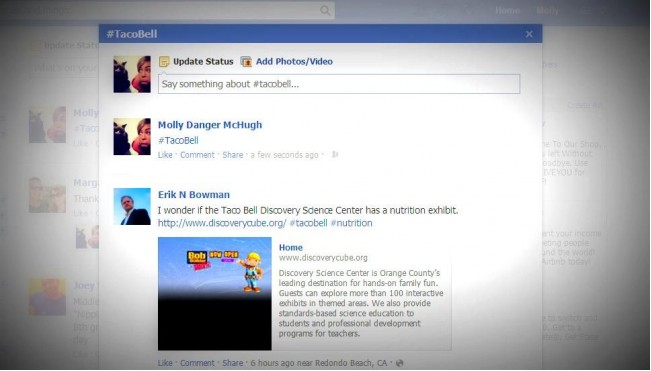
One interesting way hashtags are optimized for Facebook: if you cross-post from Instagram, the hashtags you use on Instagram will appear on Facebook. But if you click on them, instead of getting sent back to Instagram, you’ll just see related hashtags on Facebook. This means that whatever is being cross-posted could change conversationally – a hashtag might mean one thing on Twitter or Instagram, and something else on Facebook; regardless, it will feed the Facebook conversation only. Yet another factor that brands will have to consider in their hashtagging campaigns.
4 Reasons Businesses Should Take Hashtags Seriously (Forbes magazine)
Hashtags are used to allow users to tag posts, pictures, or even video with a hash symbol (#) followed by a word or phrase, such as #Newtek. Doing this allows the program to categorize anything posted with that hashtag; this makes it similar to search for related posts. The implications of this program have not yet been fully realized by the business community. The ability to tag and search using hashtags can be utilized in many aspects of the business community. Here are four different ways businesses can use hashtags to their advantage.
#Promotion
A survey done by Radium one found that 51% of those who responded to the survey said that they would be more willing to share company hashtags if they were awarded discounts or chances at prizes if they were to do so. This allows leveling of the playing field when it comes to simple effective promotion for small businesses. Not only can you give discounts, and therefore bring in more customers, but this allows you to track promotions activity online.
#Conversation
Hashtags open up the social media world to better converse about your company. A website or a URL post only brings you to the company’s website while a Hashtag allows people to use it in everyday conversations they have on social media. This also allows you to track the conversation and get a better idea of what is being said and how you can utilize that information.
#Targeting
New marketing tools allow companies to target certain areas or people based on hashtags. For example, if you want to market to people with new homes you can use the hashtag #newhome to target those who are using that specific hashtag. Using this method is also beneficial because it allows you to pick out the individuals who are most likely to be using social networks and therefore more likely to give your company positive posting which you can then track using hashtags.
#Innovations
Because Hashtags are so new they are still capable of great innovations. While hashtags and their use in business have begun to be utilized there are still endless possibilities to what can be done with them. This is the most exciting realm of this new online world. With large companies like American Express announcing plans to allow customers to make purchases using hashtags the possibly are vast.